

A Complete Guide to Choosing the Right Equipment for Your Construction Site
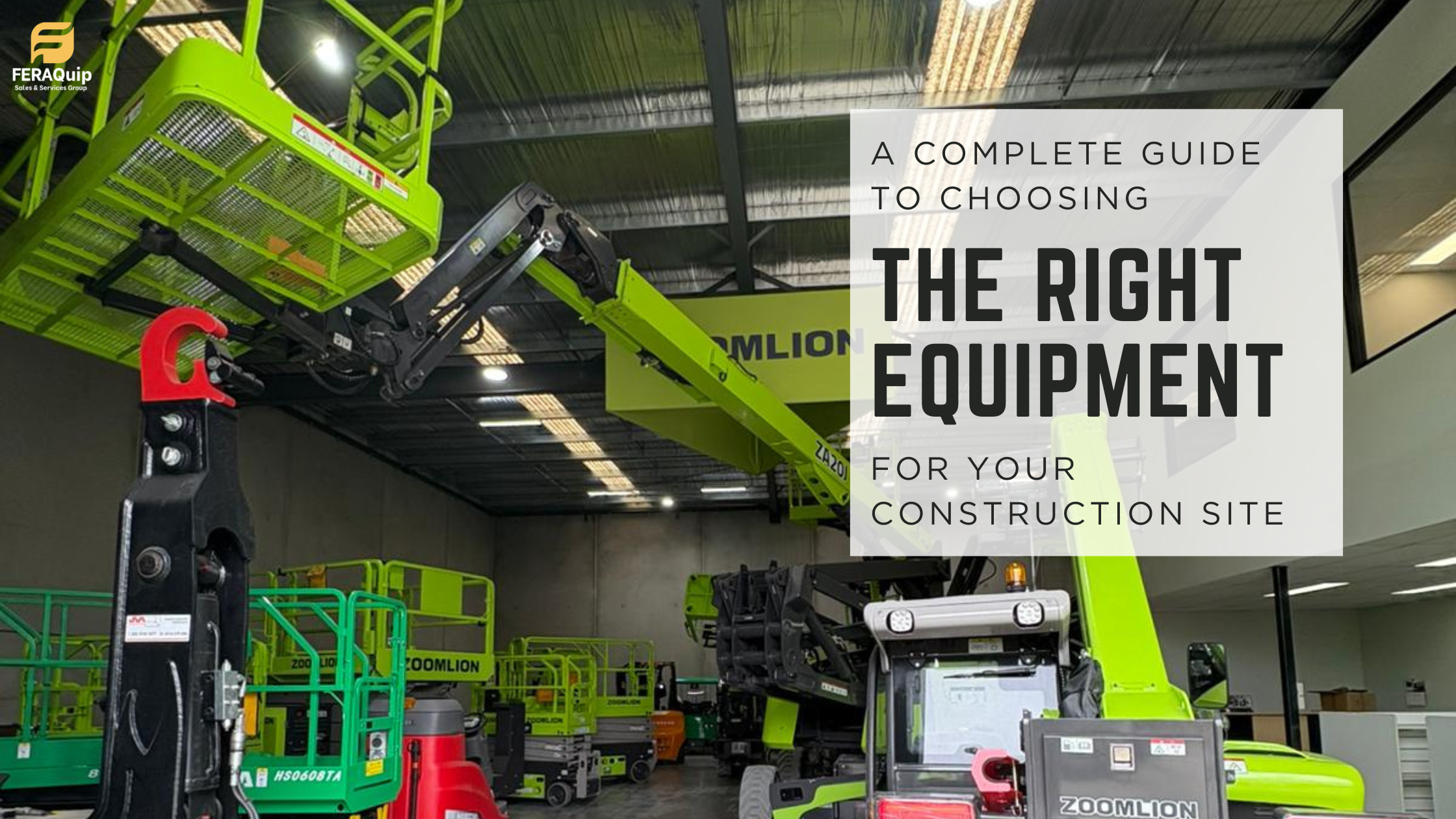
A Complete Guide to Choosing the Right Equipment for Your Construction Site
Selecting the right equipment for your project can save you headaches, such as delays, safety risks, or high costs. Terrain conditions, working height and load capacity are some of the aspects to consider before choosing the machinery needed for your project.
Below, we'll review some key points to help you choose the right equipment for your construction site.
What are the Requirements for a Construction Project?
Before making an investment and purchasing any equipment, the first thing you should review is the project's characteristics, as the type of project determines the tools you need.
Likewise, it is important to determine whether the equipment will be used indoors or outdoors, as this affects the ease or difficulty of manoeuvring the machinery. Reviewing these details is essential to identifying the right machinery for your construction site.
How to Choose the Right Equipment for a Construction Site?
Just as every construction site has specific needs, machines are designed for a purpose. Understanding how a tool works and what you need it for will make your life easier.
Always consider the load capacity, the maximum height it reaches and its stability characteristics, as well as the warranty and the manufacturer. Choose guaranteed brands and buy your machines from certified and reputable suppliers. This way, you protect your equipment and your budget.
Safety Requirements on a Construction Site
After evaluating the suitability of a machine for the tasks you need to perform, the next step is to verify that it complies with all relevant standards and regulations. In addition, operators and construction personnel must have the necessary licenses and permits to operate the machinery. Don't forget to perform equipment maintenance. Remember that adhering to workplace safety guidelines prevents accidents, protects the well-being of personnel whilst avoiding delays in project execution.
What to Consider Before Choosing Construction Equipment?
After identifying the characteristics of the project and the type of equipment needed, the next step is to review the machine's specifications and verify its suitability.
An important aspect is the machine's height and reach. Determine if you only need accessibility or if, on the contrary, you require equipment that can operate from different angles and overcome obstacles.
It is also important to verify the load capacity, as each machine has a specific weight limit and exceeding it can compromise the safety and execution of the project. Therefore, it is necessary to consider the type of load and the materials to be transported.
Likewise, identify the type of terrain where the project will take place. If it is an irregular, swampy, or unstable surface, you will need equipment that provides stability, safety, and durability.
Also consider the available space. If there are narrow or hard-to-reach areas, you'll need equipment that's easy to maneuverer or has a smaller turning radius.
Finally, it's essential to verify the power. Generally, diesel-powered machines are used in large spaces or outdoors, while electric or lithium-ion machines are used indoors or in areas with emissions restrictions.
Always remember to check every detail before making an investment. Keep in mind that greater efficiency means fewer risks and improved safety.
Frequently Asked Questions (FAQs)
What equipment is used on a construction site?
There is a wide range of machines used for construction site, their suitability depends on the type of project and the tasks to be performed. Generally, the most common are forklifts, telescopic handlers, scissor lifts, boom lifts and excavators.
How much does construction equipment cost?
The price of construction equipment is determined by the type of machine, its capacity, brand and specifications. Small equipment can cost a few thousand dollars, while heavy machinery requires a larger investment. At FERAQuip financing options are also available to make the investment more manageable.
How to finance construction equipment?
A common practice to mitigate the initial costs of a project is to finance construction equipment. Among the many options available, one of the most common is to design a payment plan directly with the machinery supplier. This allows companies to acquire the tools, begin construction and spread the debt over the short or medium term, while maintaining your cash flow.
How do you choose the right equipment supplier?
When choosing your equipment supplier, always check the brands they offer, their availability and their experience in the sector. Also, try to visit their facilities to review their catalogue in detail and receive expert advice. A good supplier is the first step in choosing the right machines for your project. Consider maintenance options.
Common Mistakes to Avoid
One of the most common mistakes is choosing equipment based on price rather than suitability for the work. Buying the wrong machine can lead to delays and even cost overruns, because in addition to being inefficient, it will later need to be replaced with one that performs its functions, and the initial savings will turn into a headache later.
Another common mistake is underestimating the importance of operator training and licensing. Remember that all equipment needs to be operated by trained personnel to ensure safety and efficiency.
Avoiding these types of mistakes will help you improve your company's productivity, maintain safer work environments, and, of course, save money.
Need help choosing the right equipment?
At FERAQuip, we can help you find the right machinery for your construction site.
Whether you need forklifts, telescopic handlers, scissor lifts, or aerial work platforms, we offer reliable equipment at the best price.
📩 Contact us and we'll be happy to advise you.
