

How to Choose the Right Scissor Lift for Your Job Site
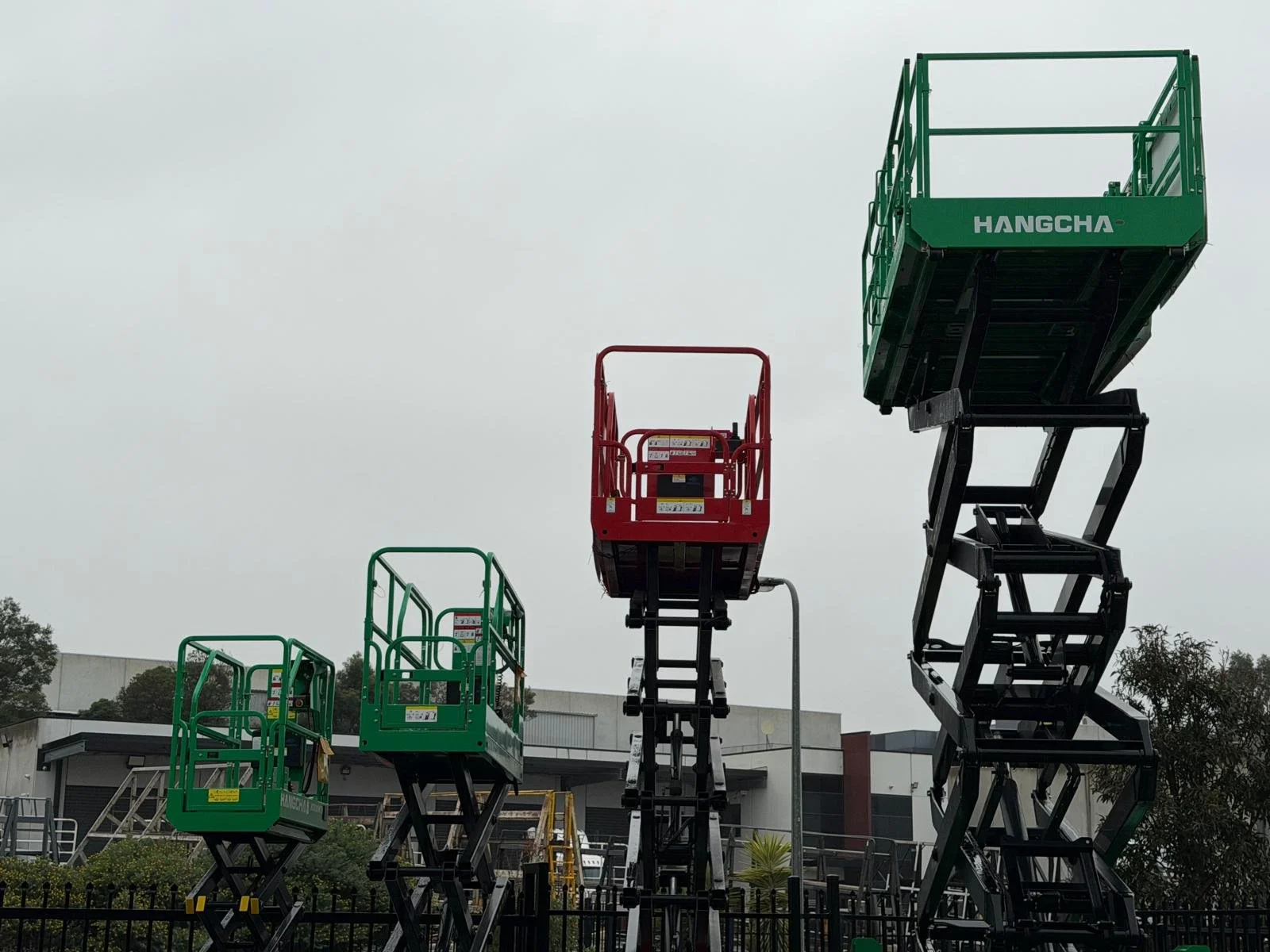
How to choose right scissor lift for your job site
How to Choose the Right Scissor Lift for Your Job Site
Selecting the appropriate scissor lift for a job site can significantly affect efficiency, safety, and production. Understanding the particular needs of your project is the first step in choosing the best machine as there are various versions made for indoor, outdoor, and difficult terrain.
Think about things like working height, ground conditions, available space, access requirements, and how often the machine will be used before choosing whether to purchase, rent, or hire equipment. Making the correct decision can prevent needless equipment expenses while assisting your crew in completing elevated work effectively.
Indoor or Outdoor: Which Scissor Lift Do You Need?
One of the most crucial things to think about is the setting in which the equipment will be utilised.
Electric scissor lifts are frequently a sensible option for warehouses, factories, shopping centres, commercial buildings and other confined spaces. They are appropriate for inside applications including maintenance, electrical installation, painting, and building services since they run silently and produce no direct exhaust.
A narrow electric scissor lift might offer more adjustability if there is limited room. Narrow aisles, constrained workspaces, and places where access via doors or elevators is necessary can all benefit from compact models.
A different kind of machine can be needed for outdoor job locations. A rough terrain scissor lift, which is made to function over more difficult conditions, may be useful in construction sites and other uneven areas. In situations when the ground is uneven, gravelly, or otherwise difficult, a rough terrain 4x4 scissor lift can offer more traction and stability.
Before choosing a machine, organisations looking for all-terrain or rough-terrain scissor lifts for sale should take the site's ground conditions and the amount of travel necessary into account.
Choose the Right Working Height
Another important factor to consider when choosing a scissor lift is the necessary working height. A machine that is too big may make transportation and adjustability more challenging, while a machine that is too small may prevent personnel from safely reaching the necessary area.
Determine the highest point your squad must achieve first. Scissor lifts come in a variety of sizes, such as 19 feet, 26 feet, 32 feet, and 40 feet electric scissor lifts, so companies may choose equipment based on the needs of their project.
It is also important to consider the platform's size and safe working load. Make sure the chosen machine can securely support the necessary load if workers must transport tools, supplies, or equipment onto the platform.
Without the need for larger equipment, a small scissor lift rental might be an appropriate alternative for smaller maintenance activities or projects with restricted access requirements.
Consider Power and Operating Requirements
Power options may vary depending on the project. Electric scissor lifts are especially well-suited for indoor settings where it's crucial to have no direct emissions and minimal noise.
By combining electric operation with another power source, a bi-energy scissor lift can offer more flexibility for projects involving both indoor and outdoor labour.
Numerous industrial and construction applications may also benefit from the use of a hydraulic scissor lift. The ideal choice will rely on the type of work being done, operational conditions and working environment.
If you are thinking about purchasing an electric scissor lift, evaluate the machine's intended usage, frequency of operation, and necessity of moving between various work areas.
Think About Site Access and Ground Conditions
A scissor lift might not be appropriate if it cannot readily access the work area, even if it satisfies your necessary working height.
Take into account the width of gates, aisles, doorways, and other access points. Compact or narrow machinery may be needed for indoor projects, especially in commercial buildings or warehouses.
Examine the state of the ground before working on outside projects. Standard electric models might work well on smooth, level areas, but rugged or uneven surfaces might call for a rough terrain scissor lift with the right traction and ground clearance.
Transportation needs to be taken into account as well. Make sure the machine can be brought to the site and moved around the work area safely before hiring a scissor lift or buying equipment.
Should You Buy, Hire or Rent a Scissor Lift?
How frequently you require the equipment will determine which purchase option is best for you.
Purchasing through scissor lift sales might offer a workable long-term solution for companies that frequently need access equipment. Consumers searching for scissor lifts for sale can select equipment according to their application, budget, and anticipated usage frequency.
Scissor lift leasing or rental might offer more flexibility for short-term tasks without the long-term commitment of ownership. Hiring a scissor lift might be a more sensible choice if the equipment is only needed for a certain project.
When choosing whether to purchase or hire, consider the project's duration, frequency of usage, transportation, maintenance needs, and overall budget.
Find the Right Scissor Lift for Your Job
No single scissor lift is suitable for every situation. Your needed working height, operational environment, ground conditions, access needs, power source, and project duration will all influence the best machine.
To satisfy a variety of client and project needs, FERAQuip offers scissor lift sales, rentals and rentals. FERAQuip can assist you in finding an appropriate solution whether you are looking to purchase a scissor lift, need a scissor lift for rent, or need equipment for a short-term or long-term project. Additionally, we offer equipment solutions and elevated work platform (EWP) sales to suit a variety of industries and applications.
Ferquently Asked Questions (FAQs)
1. How do I choose the right scissor lift for my job site?
Consider the required working height, ground conditions, available space, site access, platform capacity, power source, and how long you will need the equipment. Indoor projects often suit electric models, while outdoor or uneven sites may require a rough terrain scissor lift.
2. What is the difference between an electric and rough terrain scissor lift?
Electric scissor lifts are generally designed for smooth, level surfaces and are well suited to indoor environments because they operate quietly and produce no direct exhaust emissions. Rough terrain scissor lifts are designed for outdoor sites where additional traction, stability, and ground clearance may be required.
3. What size scissor lift do I need?
The right size depends mainly on the height you need to reach and the space available on site. Common options include 19 ft, 26 ft, 32 ft, and 40 ft scissor lifts. You should also check the platform dimensions and safe working load before selecting a machine.
4. Can scissor lifts be used on uneven ground?
Some scissor lifts are specifically designed for uneven or challenging outdoor surfaces. A rough terrain or 4x4 scissor lift may be more suitable for gravel, construction sites, and other difficult ground conditions. Always check the manufacturer's operating requirements before use.
5. Is it better to buy or hire a scissor lift?
Buying may make more sense for businesses that use scissor lifts regularly, while scissor lift hire or rental can be more practical for short-term or occasional projects. Consider usage frequency, project duration, maintenance, transportation, and overall cost when deciding.
6. What should I check before hiring or buying a scissor lift?
Check the machine's working height, platform capacity, overall dimensions, power type, terrain capability, and access requirements. You should also make sure the scissor lift can be safely transported to the site and moved through any gates, doors, aisles, or restricted areas.
